Read Stories About african adventure

Athletics is arguably Kenya’s biggest selling point, second only to our wildlife. It is not news that the concentration of Kenyan running talent is in the North Rift. This undulating countryside has nurtured more long distance titleholders than we can keep up with. While the naming system prefixed by the Kip/Kib for boys or Che/Chep of the resident Kalenjin language-speaking communities might make it confusing to tell the champions apart, the sheer abundance of talent is unquestionable. One would assume that these champions are treated like small gods at home like they are abroad, Far from it. It seems the familiarity has numbed out their celebrity.
Few outside the athletic community care for the work put in. As a matter of fact, the secret to North Rift’s winning formula has been delegated to foreign curiosity while the rest of the citizenship remain content in basking in the glory earned by our runners on race day. Few Kenyans have bothered to notice that the world now uses the highlands of the North Rift for their training-with impressive results.
But this attitude is fast changing. Lifestyle diseases, egged on by a global pandemic, have sparked an appreciation for healthy living. The solution lies in our very own backyard. None better to teach us this discipline than our track and field stars who live it. This quest let me to the Mecca of athletics for a lifestyle immersion like no other. While at it, I sought to unravel the hidden gems of the North Rift region of Kenya.
My journey began from JKIA on a chilly morning destined for Eldoret in Uasin Gishu County christened the ‘City of Champions’. I couldn’t shake the back-to-school excitement that always gripped me on the barely hour-long flight that would also be my first since the pandemic struck. It was only after breakfast at Noble Hotel that I regained my wits and came to terms with the fact that we could actually travel again after months cooped up in our homes. For a nation whose touristic staple is beach and safari, a green stop is a welcome addition. My base for the trip would be Naiberi River Campsite and Resort whose architecture Flintstones fans, yes the cartoon, would appreciate.
The roaring Chepkiit waterfalls are a sight to behold as is the evergreen Nandi Bears Golf Club. Allow me to digress. The Nandi Bear tag is the western fascination with a mythical beast, akin to the werewolf, thought to have roamed the area. Known as locally as Chemosit or Kerit, no evidence exists that this ferocious four-feet-tall creature with long clawed feet, a sloping back marked by reddish hair, and a taste for human scalps ever existed. It might as well have been a spotted hyena. What this much peddled myth deflects, however, is that Nandi Bears Club is the symbol of Nandi defiance to colonial rule.
This is the scene where Nandi Orkoiyot (chief spiritual and military leady) Koitalel Arap Samoei and his entourage were murdered in cold blood. After leading a decade-long resistance against British forays on his territory that even delayed the construction of the Lunatic Express, the Orkoiyot was tricked into a truce meeting by a Colonel Richard Meinertzhagen. In the meeting held on October 19, 1905, the colonel broke rank and cowardly shot the Nandi leader accompanied by 22 elders. This officer would later be disgraced for among other things fraud. Despite a horrid history, these immaculate greens are one of the finest in the country.
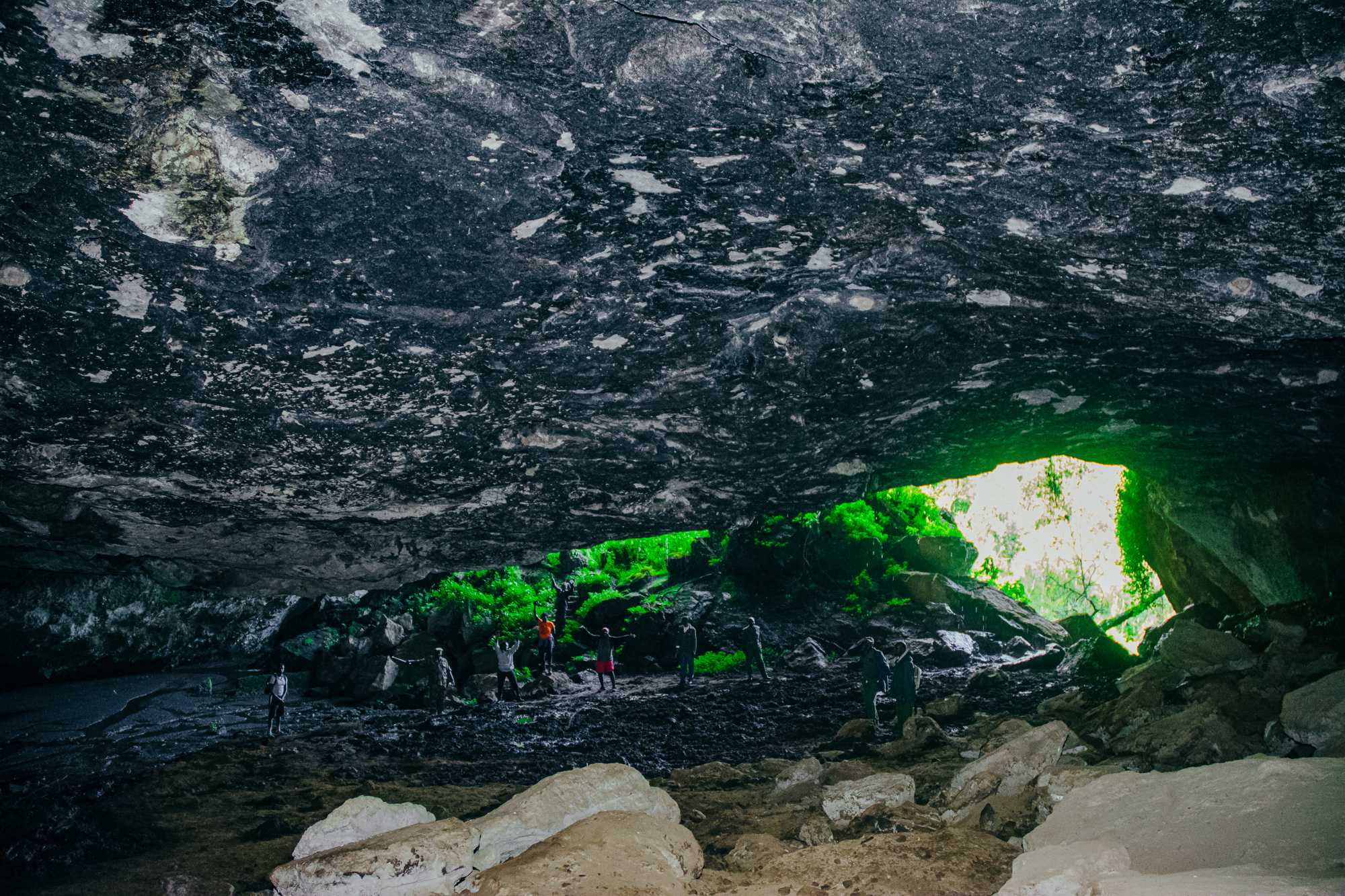
Natural rock features on every structure including the cosy rooms and the central mess laden with African art. This natural rock theme is fitting because the site on which the resort stands features the Sirikwa Holes where the ancestors of the Kalenjin dwelled. A walk through the natural forest behind the swimming pool reveals a sample of these saucer-shaped hollow structures that were reinforced with rock.
On hand to receive us on this awe-inspiring leg was the pioneering team of Kapsait Nike Camp; Secretary Kenya Veteran Athletes Association, multiple marathon gold medallist, Simon Biwott flaked by Paris Marathon champion (1999) John Kemboi and São Paulo Title holder (1999 and 2000) Vincent Kemboi. While we could hardly contain ourselves as they introduced themselves; they being the equivalent of football greats Pelé, Ronaldo and Zenedine Zidane, their humility was loud. We soon found out why when were granted access to the otherwise restricted camp. Despite it being an individual sport, this athletic camp exalts team work above everything else. Training, as is everything else here including chores, is communal.
One article summed Kapsait Nike Camp aptly-“this is a camp with no stars but numerous medals”. The result of this mantra is obvious. To paint an image of its pedigree, the current marathon world holder for women running in a mixed-sex race, Brigid Kosgei, trains here. In contrast to all its accolades, however, the camp is a Spartan affair designed to not only nurture raw talent, but also help the student conquer self. Only then, the camp director, Erick Kiamaiyo, insists are they ready to take on the competition on the world stage. Speaking from experience, the camp director who doubles up as coach is a two time Honolulu Marathon champion (1996 and 1997). Yet in all its modesty, the overflowing warmth from hungry-for-success eyes of the 40 plus athletes was testament that limitations to what humanity can achieve is in the mind. A meal of the softest chapatti and ‘milky’ tea prepared by the team was a touching gesture.
My personal highlight was meeting 56-kilometre Two Oceans Marathon (2018) title-holder Justin Kemboi-Chesire. For those not acquainted with this discipline, an ultra-marathon encompasses all foot races longer than the traditional 42k marathon. Mr Kemboi runs a super-human 90 kilometres comparable to covering the distance from Nairobi’s CBD to Naivasha or Karatina towns.
Despite its winning ways, it was hard to overlook the fact that the future of the camp is in jeopardy. With fewer races to compete in, as a result of the pandemic, the future of next crop of champions hangs by a thread. This is a situation that greatly worries Erick Kimaiyo. While remaining optimistic that competitive foot races will resume, his appeal is for sponsors to help cover training costs of the youth in camp. Better yet, he invites more visitors to visit this Mecca of long distance running. Here they can immerse themselves in a culture that will encourage them to adopt a healthier, modest and more sustainable lifestyle. Running he says will keep most lifestyle diseases at bay.
Accommodation for sports tourists is available for those who would wish to give make lifestyle changes or simply keen on a break. We, unfortunately, would not be staying longer with the champions because we had to wake up early the following morning to mark out bucket list Mt Elgon National Park. Details Thorn Mulli travelled to the North Rift courtesy of Jambo Jet as part of the #NowYouCanFly campaign which seeks to spur domestic tourism. The trip highlighted Uasin Gishu-City of Champions, Nandi County-Source of Champions, Elgeyo Marakwet-Home of Champions and Mount Elgon in Trans Nzoia County.